

Conditions We Treat
Expert care for the wounds that won't heal on their own.
From diabetic foot ulcers to post-surgical complications, we bring hospital-grade wound care into the home — with the time, tools, and coordination to actually move healing forward.

01 · Condition
Diabetic Foot Ulcers
One of the most serious — and most preventable — complications of diabetes.
Open wounds on the foot, toes, or heel in patients with diabetes. Diabetes affects both nerves and blood vessels in the lower extremities, so injuries often go unnoticed and the body struggles to heal them. The vast majority can heal without surgery when treated correctly.
- Sharp debridement and offloading strategies
- Skin substitute (CTP) treatments for qualifying ulcers
- MIST therapy and advanced dressings
- Direct coordination with podiatry, vascular, and endocrinology
02 · Condition
Venous Leg Ulcers
The most common chronic wound in adults — and one of the most treatable in skilled hands.
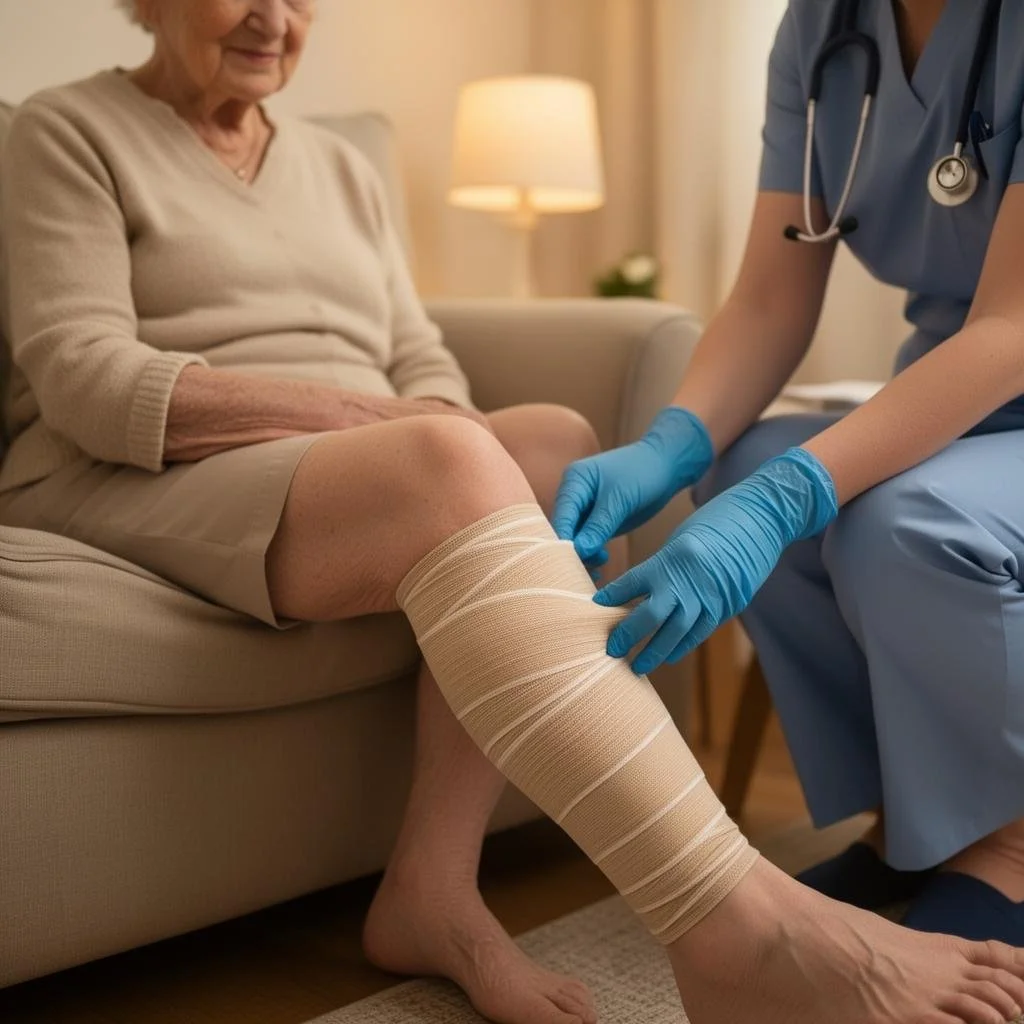
Shallow, often heavily draining wounds on the lower leg or ankle, caused by chronic venous insufficiency. Compression therapy is the cornerstone of effective treatment — dressings alone almost never close these wounds.
- Multi-layer compression bandaging — the gold standard
- Selective debridement and absorbent dressings
- Skin care for fragile surrounding tissue
- Compression stocking fitting and recurrence prevention

03 · Condition
Arterial Ulcers
A vascular emergency in slow motion — recognition and coordination are everything.
Wounds caused by reduced arterial blood flow (PAD), typically on the toes, feet, or outer leg. Often painful with a distinctive "punched-out" appearance. They will not heal until circulation is restored, so vascular assessment comes first.
- Comprehensive arterial assessment before any treatment
- Immediate vascular surgery referral when indicated
- Protective dressings and pain management
- Honest, ongoing conversations about prognosis

04 · Condition
Pressure Injuries
Sometimes called bedsores — among the most preventable wounds in medicine.
Damage to skin and underlying tissue from sustained pressure over a bony prominence. Common in bed-bound or chair-bound patients. Healing requires pressure relief — no dressing alone is enough.
- Full staging with photographs and measurements
- Repositioning plans and caregiver education
- Support surface recommendations
- Wound VAC and skin substitutes when indicated

05 · Condition
Non-Healing Surgical Wounds
When an incision doesn't close on schedule, patients often feel stranded. We step in.
Post-operative incisions that have separated, reopened, or continued to drain — abdominal, sternal, joint replacement, C-section, amputation, or wounds left to heal by secondary intention. We coordinate directly with the operating surgeon.
- Sharp debridement and infection management
- Negative pressure wound therapy (wound VAC)
- Advanced dressings matched to drainage
- Direct communication with the surgical team

06 · Condition
Burn Wounds
Once the patient is home, the work of healing has just begun.
Ongoing in-home care for partial-thickness burns and recovering full-thickness burns after burn-center or ER discharge. Vigilant infection monitoring and atraumatic dressing changes make all the difference.
- Atraumatic dressing changes to minimize pain
- Dressings matched to depth and exudate
- Coordination with burn centers and plastic surgery
- Education on positioning and scar prevention

07 · Condition
Skin Tears & Traumatic Wounds
Common in older adults — done right, most heal in two to four weeks.
Acute wounds from shearing, friction, or impact that separate the layers of fragile skin. We also treat fall-related abrasions, lacerations, medical-adhesive injuries (MARSI), and hematomas with overlying breakdown.
- Gentle cleansing and skin-flap approximation
- Atraumatic dressings and silicone tapes
- Prevention strategies for fragile skin
- Caregiver education to avoid recurrence

08 · Condition
Chronic & Stalled Wounds
Open longer than four weeks? It needs a fresh set of eyes — and a different approach.
Wounds that have stalled despite previous care. Most are still treatable — they just need a clinician willing to do the work, identify what's been missed, and change the plan instead of repeating what isn't working.
- Full re-assessment of the wound and the whole patient
- Cultures, biopsies, and labs when warranted
- Skin substitute (CTP) and advanced therapies
- Specialist coordination — vascular, ID, surgery
09 · Condition
Any Other Non-Healing Wound
If it isn't on this list — call us anyway.
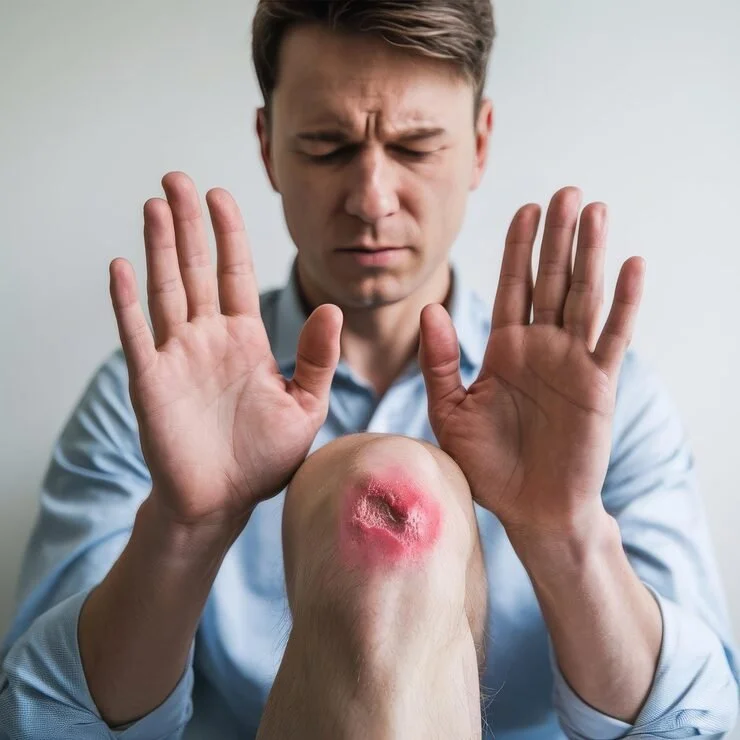
If you or a loved one has a wound that just isn't healing, we want to hear about it. We treat the full range of acute and chronic wounds, and if it falls outside our scope, we'll point you to the right specialist without delay.
- No referral needed for an initial conversation
- Most patients seen within a few days
- Medicare and most major insurance accepted
- Direct coordination with your existing providers

Contact
If a wound has been open longer than four weeks, call us.
Chronic wounds need a fresh set of eyes and a different approach. Most are still treatable. They just need someone willing to do the work.